Products to Honor, Invoke, and as Offering to Heracles (Hercules)
In Greek mythology, Heracles was the son of the affair Zeus had with the mortal woman Alcmene. When Zeus desired Alcmene, he decided to make one night last three by ordering Helios, the god of the sun, not to rise for three days, so he would have more time with Alcmene. Zeus made love to her after disguising himself as her husband, Amphitryon, home early from war (Amphitryon did return later the same night, and Alcmene became pregnant with his son at the same time, a case of heteropaternal superfecundation, where a woman carries twins sired by different fathers). A major factor in the well-known tragedies surrounding Heracles is the hatred that the goddess Hera, wife of Zeus, had for him. Fear of Hera’s jealousy and revenge led Alcmene to expose the infant Heracles, but he was taken up and brought to Hera by his half-sister Athena, who played an important role as protectress of heroes. Hera did not recognize Heracles and nursed him out of pity. Heracles suckled so strongly that he caused Hera pain, and she pushed him away. Her milk sprayed across the heavens and there formed the Milky Way. But with divine milk, Heracles had acquired supernatural powers. Athena brought the infant back to his mother, and he was subsequently raised by his parents.
Heracles was a great-grandson and half-brother (as they are both sired by the god Zeus) of Perseus, and similarly a half-brother of Dionysus. He was the greatest of the Greek heroes, the ancestor of royal clans who claimed to be Heracleidae, and a champion of the Olympian order against chthonic monsters. In Rome and the modern West, he is known as Hercules, with whom the later Roman emperors, in particular Commodus and Maximian, often identified themselves. The Romans adopted the Greek version of his life and works essentially unchanged, but added anecdotal detail of their own, some of it linking the hero with the geography of the Central Mediterranean. Details of his cult were adapted to Rome as well. Many popular stories were told of his life, the most famous being The Twelve Labours of Heracles. Heracles was the greatest of Hellenic chthonic heroes, but unlike other Greek heroes, no tomb was identified as his. Heracles was both hero and god. He embodies the closest Greek approach to a “demi-god”. The core of the story of Heracles has been identified as originating in Neolithic hunter culture and traditions of shamanistic crossings into the netherworld.
Heracles’ role as a culture hero, whose death could be a subject of mythic telling, was accepted into the Olympian Pantheon during Classical times. This created an awkwardness in the encounter with Odysseus in the episode of Odyssey XI, called the Nekuia, where Odysseus encounters Heracles in Hades:
And next I caught a glimpse of powerful Heracles—
His ghost I mean: the man himself delights
in the grand feasts of the deathless gods on high …
Around him cries of the dead rang out like cries of birds
scattering left and right in horror as on he came like night …
Some sources explained that the cult of Heracles persisted because of the hero’s ascent to heaven and his suffering, which became the basis for festivals, ritual, rites, and the organization of mysteries. Extraordinary strength, courage, ingenuity, and sexual prowess with both males and females were among the characteristics commonly attributed to him. Heracles used his wits on several occasions when his strength did not suffice
Showing all 16 results
-
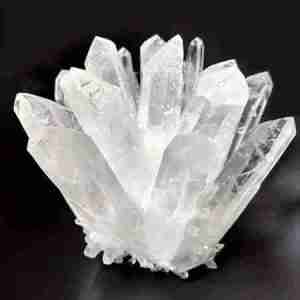
Clear Quartz Crystal Cluster, 2.3-4.7″ H x 3.14-4.17″ W
$80.81 USD Add to cart -
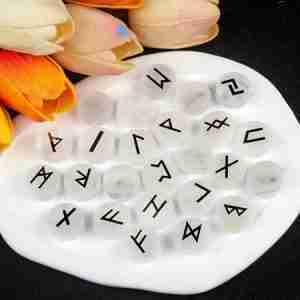
Clear Quartz Crystal Divination Engraved Rune Stones, 25 piece set
$34.92 USD Add to cart -

Clear Quartz Crystal Faceted Dowsing Divination Pendulum Pendant with Chain
$20.67 USD Add to cart -
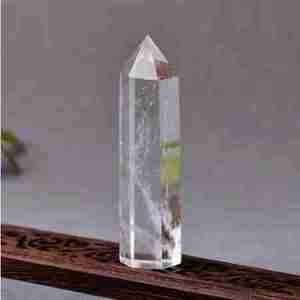
Clear Quartz Crystal Pillar / Tower / Obelisk / Point / Wand, 2.76″ – 3.15″ H
$25.48 USD Add to cart -

Clear Quartz Crystals, Small Tumbled Polished Stones, pack of 65 (0.1 – 0.5″)
$7.99 USD Add to cart -

Clear Quartz Elephant Crystal Sculpture Totem Statue, 1.38″ H x 1.57″ L x 0.89″ W
$19.33 USD Add to cart -

Clear Quartz Sphere Crystal Ball, 2.95″ – 3.15″
$117.96 USD Add to cart -

Ginkgo Leaf, Cut & Sifted (Ginkgo Biloba)
Price range: $5.08 through $8.69 USD Select options This product has multiple variants. The options may be chosen on the product page -

Meadowsweet Flowers, cut & sifted (Filipendula Ulmaria)
Price range: $6.56 through $11.65 USD Select options This product has multiple variants. The options may be chosen on the product page -

Money, Wealth, Prosperity & Success Crystal Gemstone Stretch Bracelet
Price range: $30.60 through $31.88 USD Select options This product has multiple variants. The options may be chosen on the product page -
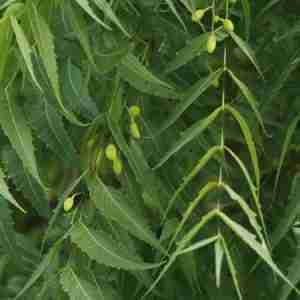
Neem Oil (Azadirachta Indica) – CARRIER OIL
$14.35 USD Add to cart -
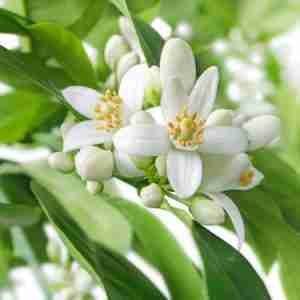
Neroli, aka Orange Blossom Essential Oil, Undiluted (Citrus Aurantium Amara)
$12.02 USD Add to cart -

Onyx (Matte with Gloss Stripe) & 925 Sterling Silver Crystal Gemstone Stretch Bracelet
Price range: $53.32 through $117.99 USD Select options This product has multiple variants. The options may be chosen on the product page -

Onyx (Matte with Gloss Stripe), Obsidian, & Sterling Silver Crystal Gemstone Necklace
Price range: $73.26 through $117.99 USD Select options This product has multiple variants. The options may be chosen on the product page -

Safflower Flower Petals (Carthamus Tinctorius)
Price range: $10.34 through $19.20 USD Select options This product has multiple variants. The options may be chosen on the product page -

Sarsaparilla Root Powder, Mexican (Smilax Medica)
Price range: $5.13 through $8.78 USD Select options This product has multiple variants. The options may be chosen on the product page