Products to Honor, Invoke, and as Offering to Hades (Pluto)
In ancient Greek religion and mythology, Pluto was the ruler of the Greek underworld. The earlier name of the god was Hades, which became more common as the name of the underworld itself. Pluto represents a more positive concept of the god who presides over the afterlife. Pluto ruled the deep earth that contained the seeds necessary for a bountiful harvest. Pluto was venerated as both a stern ruler and a loving husband to Persephone. The couple received souls in the afterlife and are invoked together in religious inscriptions, being referred to as Plouton and as Kore respectively. Hades, by contrast, had few temples and religious practices associated with him, and he is portrayed as the dark and violent abductor of Persephone. Pluto and Hades differ in character, but they are not distinct figures and share two dominant myths. In Greek cosmogony, the god received the rule of the underworld in a three-way division of sovereignty over the world, with his brother Zeus ruling the sky and his other brother Poseidon sovereign over the sea. His central narrative in myth is of him abducting Persephone to be his wife and the queen of his realm. The names of both Hades and Pluto appear also in the Greek Magical Papyri and curse tablets, with Hades typically referring to the underworld as a place, and Pluto regularly invoked as the partner of Persephone.[76] Five Latin curse tablets from Rome, dating to the mid-1st century BC, promise Persephone and Pluto an offering of “dates, figs, and a black pig” if the curse is fulfilled by the desired deadline. The pig was a characteristic animal sacrifice to chthonic deities, whose victims were almost always black or dark in color. A set of curse tablets written in Doric Greek and found in a tomb addresses a Pasianax, “Lord to All,” sometimes taken as a title of Pluto, but more recently thought to be a magical name for the corpse. Pasianax is found elsewhere as an epithet of Zeus, or in the tablets may invoke a daimon like Abrasax. Greek inscriptions record an altar of Pluto, which was to be “plastered”, that is, resurfaced for a new round of sacrifices at Eleusis. One of the known ploutonia was in the sacred grove between Tralleis and Nysa, where a temple of Pluto and Persephone was located. Visitors sought healing and dream oracles. The ploutonion at Hierapolis, Phrygia, was connected to the rites of Cybele, but during the Roman Imperial era was subsumed by the cult of Apollo, as confirmed by archaeological investigations during the 1960s. It too was a dream oracle. The sites often seem to have been chosen because the presence of naturally occurring mephitic vapors was thought to indicate an opening to the underworld. In Italy, Avernus was considered an entrance to the underworld that produced toxic vapors, but Strabo seems not to think that it was a ploutonion. The Bibliotheca of Pseudo-Apollodorus uses the name Plouton instead of Hades in relating the tripartite division of sovereignty, the abduction of Persephone, and the visit of Orpheus to the underworld. This version of the theogony for the most part follows Hesiod, but adds that the three brothers were each given a gift by the Cyclopes to use in their battle against the Titans: Zeus thunder and lightning; Poseidon a trident; and Pluto a helmet of invisibility (kyneê). Medieval mythographies, written in Latin, continue the conflation of Greek and Roman deities begun by the ancient Romans themselves. Perhaps because the name Pluto was used in both traditions, it appears widely in these Latin sources for the classical ruler of the underworld, who is also seen as the double, ally, or adjunct to the figure in Christian mythology known variously as the Devil, Satan, or Lucifer. The classical underworld deities became casually interchangeable with Satan as an embodiment of Hell. For instance, in the 9th century, Abbo Cernuus, the only witness whose account of the Siege of Paris survives, called the invading Vikings the “spawn of Pluto.” In the Little Book on Images of the Gods, Pluto is described as an intimidating personage sitting on a throne of sulphur, holding the scepter of his realm in his right hand, and with his left strangling a soul. Under his feet three-headed Cerberus held a position, and beside him he had three Harpies. From his golden throne of sulphur flowed four rivers, which were called, as is known, Lethe, Cocytus, Phlegethon and Acheron, tributaries of the Stygian swamp.
Showing all 37 results
-

Baobab Oil (Adansonia Digitata) – CARRIER OIL
$17.54 USD Add to cart -

Cypress Essential Oil, Undiluted (Cupressus Sempervirens)
$9.03 USD Add to cart -
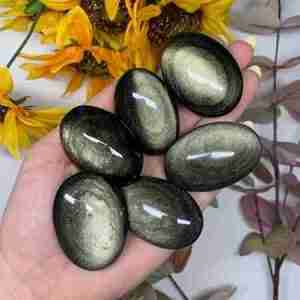
Gold Obsidian Crystal Palm Worry Stone
$22.29 USD Add to cart -
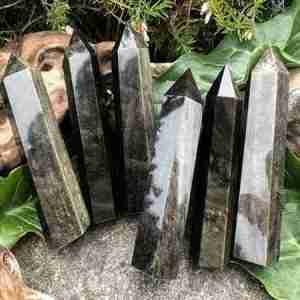
Gold Obsidian Crystal Point / Pillar / Tower / Wand, 3.7″ H x 0.75″ W
$31.77 USD Add to cart -

Hardwood Ash (unsifted)
Price range: $6.35 through $24.31 USD Select options This product has multiple variants. The options may be chosen on the product page -

Labradorite Serpent / Snake Crystal Sculpture Totem Statue, 1.5″ W
$39.83 USD Add to cart -

Licorice Root (Glycyrrhiza Glabra)
Price range: $7.63 through $13.77 USD Select options This product has multiple variants. The options may be chosen on the product page -

Licorice Root Liquid Extract (Glycyrrhiza Glabra)
$10.83 USD Add to cart -

Meadowsweet Flowers, cut & sifted (Filipendula Ulmaria)
Price range: $6.56 through $11.65 USD Select options This product has multiple variants. The options may be chosen on the product page -

Menthol Essential Oil, Undiluted (Mentha Piperita)
$6.73 USD Add to cart -

Moss Agate Crystal Pebbles, 1.5 ounce
$13.26 USD Add to cart -
Moss Agate Crystals, Small Tumbled Polished Stones, pack of 65 (0.1 – 0.5″)
$7.99 USD Add to cart -
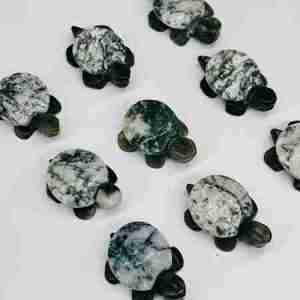
Moss Agate Turtle Crystal Totem, 0.89″ W x 1.27″ L
$17.64 USD Add to cart -
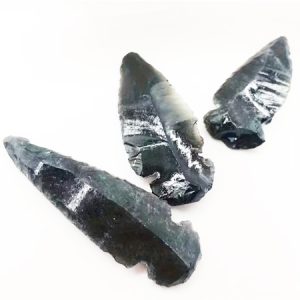
Obsidian Arrowheads, Set of 4
$48.80 USD Add to cart -

Obsidian Elephant Crystal Totem Statue, 1.38″ H x 1.57″ L x 0.89″ W
$30.67 USD Add to cart -

Obsidian Pillar / Tower / Point / Wand, 3.4″ H x 0.75″ W
$26.55 USD Add to cart -

Obsidian Raven / Crow Sculpture Totem Statue, 1.38″ H
$19.35 USD Add to cart -

Obsidian Sitting Cat Crystal Sculpture Totem Statue, 1.5″ H x 0.9″ W
$19.32 USD Add to cart -

Obsidian Sleeping Cat Crystal Sculpture Totem Statue, 1.2″ x 2.36″
$30.99 USD Add to cart -

Obsidian Small Tumbled Pebbles, 1.5 ounce
$10.20 USD Add to cart -
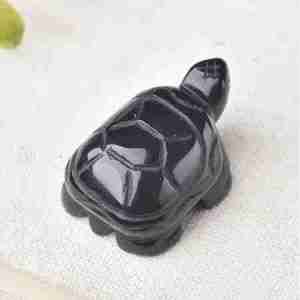
Obsidian Turtle Crystal Totem Statue, 1.49-1.65″ L x 0.98-1.18″ W
$17.61 USD Add to cart -

Patchouli Essential Oil, Undiluted (Pogostemon Cablin)
$11.69 USD Add to cart -
Peppermint Essential Oil, Undiluted (Mentha Piperita)
$8.80 USD Add to cart -
Peppermint Liquid Extract, Undiluted (Mentha Piperita)
$13.50 USD Add to cart -
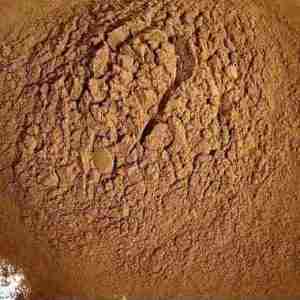
Rehmannia Root Extract Powder (Rehmannia Glutinosa)
Price range: $6.25 through $11.01 USD Select options This product has multiple variants. The options may be chosen on the product page -
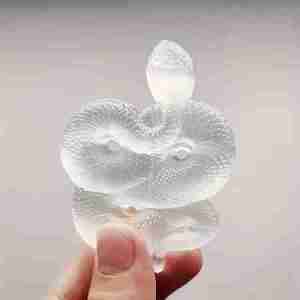
Selenite (Satin Spar) Serpent / Snake Crystal Sculpture Totem Statue, 3.1″ L
$29.15 USD Add to cart -

Spearmint Essential Oil, Undiluted (Mentha Spicata)
$7.65 USD Add to cart -

Spikenard Essential Oil, Undiluted (Nardostachys Jatamansi)
$36.61 USD Add to cart -
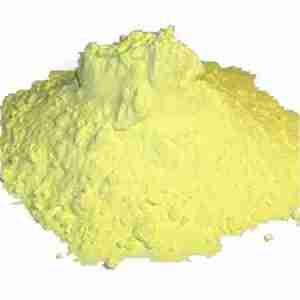
Sulfur (Brimstone) Powder – 1 Ounce
$3.49 USD Add to cart -

Tourmaline (Black) Crystal Chunk, Adjustable Rope Bracelet
$31.44 USD Add to cart -
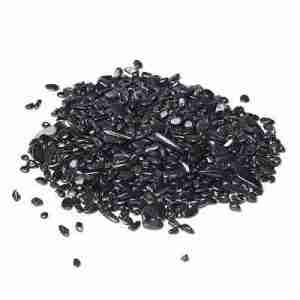
Tourmaline (Black) Crystal Pebbles, 1.5 ounce
$13.56 USD Add to cart -

Tourmaline (Black) Crystal, Adjustable Rope Necklace
$33.16 USD Add to cart -
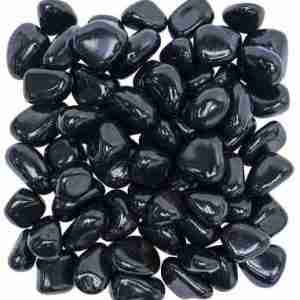
Tourmaline (Black) Crystal, Medium Tumbled Stone, Set of 4
$25.62 USD Add to cart -
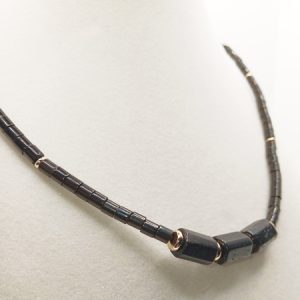
Tourmaline (Black), Obsidian & Gold Crystal Necklace
$65.64 USD Add to cart -
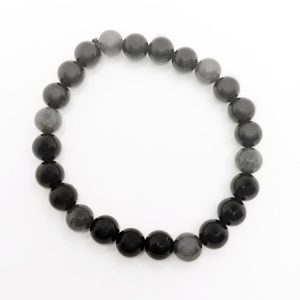
Tourmaline & Gray Rainbow Labradorite Crystal Stretch Bracelet
$37.44 USD Add to cart -

White Oak Bark, Cut & Sifted Herb (Quercus Alba)
Price range: $4.79 through $8.09 USD Select options This product has multiple variants. The options may be chosen on the product page
